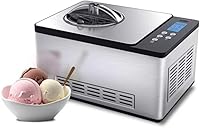
What Is a Compressor Ice Cream Maker?
A compressor ice cream maker is a machine with its own built-in freezer. A sealed compressor chills the bowl while the paddle churns, so you pour in the mix and start, with no bowl to freeze overnight.
On this page (8 sections)
- How does a compressor ice cream maker work?
- How is it different from a freezer-bowl ice cream maker?
- What can you make in one?
- Do you still need to pre-freeze the bowl?
- Which compressor ice cream makers suit which kitchens?
- What should you know before you buy one?
- How do you use and care for one?
- The bottom line on compressor ice cream makers
A compressor ice cream maker is a machine with its own built-in freezer. A sealed compressor chills the bowl while the paddle churns, so you pour in the mix and press start, with no bowl to freeze overnight.
That one difference changes how often you can make a batch and how much counter space it needs. If you've only used a freezer-bowl model, the compressor type feels like a different appliance.
How does a compressor ice cream maker work?
The compressor cools the bowl from the inside, and the paddle churns the mix against that cold surface. Refrigerant moves through a sealed loop, the same way a fridge stays cold.
Cuisinart calls its ICE-100 compressor commercial-quality and says the machine is always ready to go. Whynter describes a self-contained, CFC-free compressor that freezes the mix as it churns.
A motor turns the paddle slowly while the bowl drops in temperature. The paddle keeps scraping the cold wall so the dessert freezes evenly rather than in a solid block.
The Cuisinart runs a 60-minute countdown timer with touchpad controls and a large LCD display. The Whynter machines show run time on an LCD panel with a built-in audible timer that signals when the batch is done.
In each case the machine manages the whole chill-and-churn cycle from one press of a button.
How is it different from a freezer-bowl ice cream maker?
A freezer-bowl maker borrows cold from your kitchen freezer; a compressor maker makes its own. That's the whole difference, and it drives everything else, from the price to the batch schedule.
With a freezer-bowl machine, you store the bowl in the freezer for a day or more before each batch. Once you churn, the stored cold runs out and the bowl has to go back in the freezer.
A compressor model skips that step entirely. The trade-off is size and weight: a compressor machine is heavier and takes up more counter space, so it suits people who make ice cream regularly rather than once a summer.
If you want the lighter option, our guide to the best no pre freeze ice cream maker covers machines built around the same idea.
The parts differ too. Compressor models often come with a bowl you lift out, like the BPA-free aluminum mixing bowl on the Whynter ICM-200LS or the removable stainless bowl on the ICM-201SB.
Those bowls serve as both the freezing surface and the serving vessel, which means fewer pieces to store.
What can you make in one?
Ice cream, gelato, frozen yogurt and sorbet all work, and the machine handles each one the same way: chill the bowl, pour in the mix, churn until thick. The recipe changes, not the process.
The Cuisinart ICE-100 ships with two churning paddles, one for rich ice cream and one for gelato. Whynter lists gelato and sorbet among the desserts its machines turn out.
Some machines let you add mix-ins through a see-through lid while the batch churns. That's the moment to drop in chocolate chips, cookie pieces or nuts, near the end so they don't get pulverized.
The Whynter ICM-201SB also includes a motor protection function that guards the drive if the mixture stiffens faster than expected, which is useful when you load in a dense base.
Do you still need to pre-freeze the bowl?
No. That's the point of the compressor.
The bowl chills itself, so you can start a batch without reserving freezer space for a bowl. The mix should still go in cold from the fridge, not frozen.
That matters in a full freezer. A freezer-bowl takes up a shelf for a day before every batch, and a second batch means waiting until the next day.
A compressor machine just needs an outlet and a little counter room.
The machines also differ in how they keep the result. The Cuisinart ICE-100 adds a 10-minute Keep Cool feature that kicks in once the timer goes off, holding the ice cream or gelato cold so it doesn't soften while you finish the meal.
Whynter's upright model leans on its removable bowl, which lifts out for serving the moment the batch is ready.
Which compressor ice cream makers suit which kitchens?
The upright Whynter ICM-201SB suits small counters, the Cuisinart ICE-100 suits gelato fans, and the Whynter ICM-200LS suits big families. Each one earns its place for a different reason.
Which one saves counter space?
The Whynter ICM-201SB stands upright, so it fits in a narrower footprint than the wide, low machines. Its base is 14.25 by 12.5 inches and it rises to 14.25 inches tall.
It also has the features you'd expect at this level: an LCD timer, a self-contained compressor, a removable stainless bowl and a BPA-free churn blade that comes apart for rinsing. For a small kitchen, the upright shape is the reason to pick it.
It carries a one-year limited manufacturer warranty.
Which one suits gelato fans?
The Cuisinart ICE-100 comes with two churning paddles, one for ice cream and one for gelato. That separate gelato paddle is the reason to choose it over the Whynter machines.
It makes 1.5 quarts at a time, and its 60-minute countdown timer and touchpad controls handle the run. The 10-minute Keep Cool feature holds the dessert cold after churning ends so it doesn't soften while you finish dinner.
It measures 16.73 by 12 by 9.33 inches and comes with a limited 3-year warranty.
Which one handles the biggest batches?
The Whynter ICM-200LS churns up to 2.1 quarts at once, the largest capacity of the three. That's more than half a quart beyond the Cuisinart, which matters if you're feeding a crowd or want leftovers.
It has an LCD control panel and a built-in audible timer. The removable mixing bowl is BPA-free aluminum, and the stainless steel housing wipes clean.
The body measures 16.75 by 11.25 by 10.25 inches.
Our Whynter ICM-201SB review goes deeper on how it compares with the wider Whynter model. If a Whynter stops mid-batch or won't chill, Whynter ice cream maker troubleshooting covers the usual causes.
What should you know before you buy one?
Check the capacity against how many people you feed, and measure the counter before you order. A 1.5-quart machine serves about three to four generous portions; a 2.1-quart machine covers a family.
Weight matters too. The Cuisinart ICE-100 weighs 27.2 pounds and the Whynter models about 24.3 pounds each, so pick a spot and leave it there rather than lifting it in and out of a cabinet.
All three are hand-wash only for the bowls and paddles.
Cuisinart calls for hand washing the parts and spot or wiping the body clean, while the Whynter housings in stainless steel wipe clean in seconds. A quick wipe keeps the exterior looking sharp without soaking any electrical parts.
How do you use and care for one?
Chill the bowl, pour in the mixed and cooled base, churn, then serve or harden in the freezer. The mix should be cold from the fridge but not frozen, which gives the compressor less work and a smoother result.
Don't overfill the bowl. A batch that's too full can climb the walls and bog down the paddle.
Watch the first batch in a new machine so you learn how full is right for your recipes.
The Cuisinart ICE-100 runs a 60-minute countdown, while the Whynter models display the run time so you can stop when the texture looks right. Clean the bowl and paddle by hand with warm, soapy water, and wipe the housing.
Dry everything before it goes back together.
If you're using a Whynter for the first time, our walkthrough of how to use a Whynter ice cream maker covers the controls and the batch routine step by step.
The bottom line on compressor ice cream makers
A compressor ice cream maker is the no-planning version of a home ice cream machine. It freezes the mix itself, so there's no bowl in the freezer and no waiting between batches.
Pick the upright Whynter ICM-201SB when counter space is tight, the Cuisinart ICE-100 for gelato and the Keep Cool feature, or the Whynter ICM-200LS for the largest batch. If you only make ice cream a few times a year, a freezer-bowl model is cheaper and lighter; if you'll churn most weeks, the compressor type earns its footprint.
Whichever you choose, keep the base cold, don't overfill the bowl, and clean the parts by hand. That routine is what keeps a compressor machine running batch after batch.
Frequently asked questions
Do compressor machines need any pre-freezing at all?
No. The compressor cools the bowl from the moment you start, so there's no bowl to pre-freeze.
The mix should still go in cold from the fridge, which gives the machine less work and a smoother result.
That's the main difference from a freezer-bowl model, which needs a frozen bowl before every batch.
How long does a batch take in a compressor maker?
Most batches finish in about 40 to 60 minutes, depending on the recipe, the starting temperature of the mix and how cold the machine runs. The Cuisinart ICE-100 runs a 60-minute countdown timer, and the Whynter models show run time on an LCD panel.
Can a compressor maker handle back-to-back batches?
Yes. Because the cold comes from the machine itself, you can start a second batch once the first is out and the bowl is rinsed.
A freezer-bowl model needs the bowl refrozen between batches, which usually means waiting until the next day.
How much counter space does a compressor maker take?
Plan for roughly the footprint of a small microwave. The Cuisinart ICE-100 measures 16.73 by 12 by 9.33 inches and weighs 27.2 pounds, while the upright Whynter ICM-201SB stands 14.25 inches tall on a smaller base.